Rated excellent on Google
Free shipping over €70
Over 7,500 satisfied customers





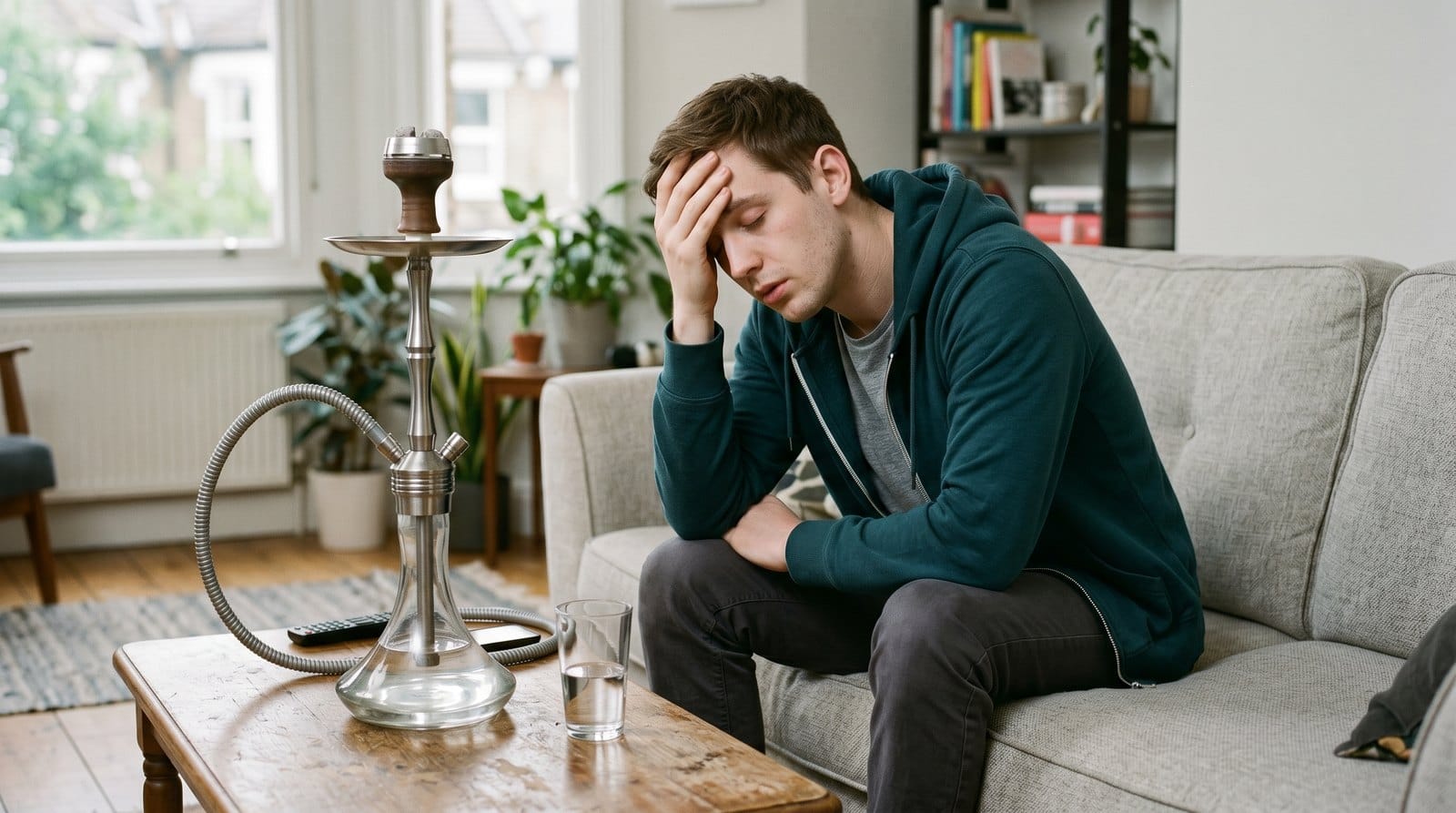
Short & honest: “Nicotine flash” and “nicotine shock” are colloquial terms (no medical terms) for the acute reaction to a unusually high nicotine dose – are typical Dizziness, nausea, headache, racing heart and paleness. This is usually the mild end of the normal nicotine effect and improves over time Quit smoking and get some fresh air by itself. First things first: Exactly the same complaints are also the early signs of one Carbon monoxide poisoning through the glowing coal – and CO is invisible, odorless and potentially life-threatening. So never dismiss any complaints after shisha as “too strong tobacco”: get out into the fresh air and relax Clouding of consciousness, shortness of breath, cramps or suspected CO immediately call 112. This text is general information and does not replace medical advice.
Many people know the feeling: after a long or strong session you suddenly feel dizzy, nauseous and pulse racing. In the hookah environment this is often called “nicotine flash”, “nicotine shock” or casually “shisha hangover”. We explain fact-based, what's behind it, as you get it from the more dangerous carbon monoxide pollution defines what you Do it step by step should – and how you can prevent it. The basis is exclusive reputable sources (medical associations, authorities, poison control center, specialist literature).
“Nicotine flash” and “nicotine shock” are no medical terms, but everyday language from the scene. This is what is meant Acute reaction of the body to an unusually high nicotine intake – medically the mild end of one dose-dependent nicotine effect. Flash and poisoning are not opposites, but one continuum: According to pulmonologists, a first or unusually high nicotine intake very often leads to symptoms such as increased salivation, dizziness, nausea, headaches and rapid heartbeat.
Nicotine works two-phase (biphasic): It works in low doses stimulating (Pulse and blood pressure increase, the well-known “kick”), in higher doses dampening – then the kick kicks in Nausea, paleness and fatigue. They are responsible nicotinic acetylcholine receptors in the nervous system: small amounts stimulate them, high amounts block them.
The symptoms range from mild to – rarely – severe. This overview classifies them:
| Level | What you notice | Classification |
|---|---|---|
| Early signs (mild) | Nausea, dizziness, headache, drowsiness, weakness | Frequently; Usually goes away after quitting smoking and fresh air |
| Cardiovascular system | Racing heart, increase in blood pressure, paleness, cold hands/feet | Typical nicotine effect of the “kick” phase |
| Stronger | Vomiting, sweating, increased salivation, trembling | Signs of a higher dose – sit down, observe |
| Alarm sign (severe) | Clouding of consciousness, convulsions, shortness of breath, confusion, chest pain | Emergency call 112 – also think about carbon monoxide |
Typical Early signs are nausea, dizziness, headache and drowsiness. Come in the stimulating phase Racing heart, increase in blood pressure, paleness and cold hands in addition. Follow with higher doses Vomiting, sweating and increased salivation. Severe courses with cramps or breathing problems only occur at very high doses practically not achieved by smoking – because the nausea forces you to stop beforehand.
A common misconception: The water “filters” the smoke. That's not true - it just cools the smoke and thereby makes it easier inhale deeply. The smoke contains the same harmful substances as cigarette smoke (nicotine, tar, carbon monoxide). That's what's crucial Crowd:
Whether you feel nauseous depends mainly on two factors from: the Nicotine dose in relation to your tolerance and the Carbon monoxide pollution. The dose increases with it Session length, chain smoking, pulling behavior and with stronger, higher nicotine tobacco (e.g. Dark Leaf). Who rarely smokes or is a beginner, feels the “kick” and nausea earlier.
That's the one central point of this guide: Nausea, dizziness, headaches and lightheadedness after shisha are often hastily attributed to “tobacco that is too strong”. But there can be one behind it underestimated carbon monoxide pollution stuck - and that is significantly more dangerous. Carbon monoxide (CO) is produced by the incomplete combustion of coal, is colorless, odorless and tasteless and ties round 300 times stronger to the red blood pigment as oxygen - so it blocks oxygen transport.
| feature | Nicotine flash | Carbon monoxide (CO) |
|---|---|---|
| Caused | Too much nicotine relative to your own tolerance | Incomplete combustion of coal |
| Noticeable? | You can taste/smell the smoke | Colorless, odorless and tasteless – not noticeable |
| Typical symptoms | Nausea, dizziness, headache, racing heart, paleness | Headache, dizziness, nausea, confusion, lightheadedness → unconsciousness |
| heart racing | Early, typical sign | Only in the case of severe poisoning (late sign) |
| Dangerousness | Mostly self-limiting (nausea slows you down) | Potentially life-threatening |
| What to do | Fresh air, sit down, wait | Get out immediately, call 112, report suspected CO |
Grob supplies a hookah opposite one Cigarette about that 10 times more carbon monoxide – the large CO factor is the main reason why acute symptoms often occur more from CO than from nicotine come. Clinical figures show that this is real: On University Hospital Düsseldorf There were around 100 CO poisonings treated in the pressure chamber in 2017 40 on hookahs back.

If you (or someone next to you) feel sick after the shisha, this procedure will help:
Most mild cases just need rest and fresh air. But in these situations Get help:
Shorter sessions, milder tobacco and coal-free heating reduce exposure. The safest choice is to abstain.
Note: Even if it is carbon-free, it remains real tobacco with nicotine - “less CO” is not “healthy”. If you have health problems, seek medical advice.
The oft-quoted statement, yes 60 mg nicotine (or 30-60 mg) are fatal for an adult scientifically outdated. The value goes into it Textbook from 1906 and dubious self-experiments of the 19th century (verified by B. Mayer, 2014). Realistically, the lower limit of the lethal oral dose is closer to 0.5-1g nicotine – The survival of significantly higher quantities is documented.
In practice this means: Fatal acute nicotine poisoning from smoking alone is very rare, because the onset of nausea prevents further intake self-limited (Self-limitation). The “flash” is the normal effect, not synonymous with poisoning.
Not quite. “Nicotine flash” is a colloquial term for the acute reaction to an unusually high dose of nicotine - in medical terms it is the mild end of the same dose-dependent effect. Severe nicotine poisoning (with cramps and respiratory paralysis) is a different, potentially life-threatening level - but it is practically never achieved through smoking alone because the onset of nausea limits further intake.
Mild symptoms such as dizziness, nausea and palpitations usually improve on their own after quitting smoking and in the fresh air. Specific “15-60 minute” information comes mainly from scene and shop blogs and is not officially proven. If the symptoms persist or worsen, you should think about carbon monoxide and get medical help.
As a layperson, it is not possible to distinguish between them with certainty - the symptoms overlap greatly (headache, dizziness, nausea). Carbon monoxide (CO) is colorless, odorless, tasteless and potentially life-threatening. If in doubt, take it seriously: get out into the fresh air and if you feel confused, short of breath or clouded in consciousness, call 112 and explicitly state the suspected CO2.
Stop smoking, leave the room and get some fresh air. Sit or lie down, legs up, breathe calmly; If you are clear and able to swallow, take small sips of still water. Do not induce vomiting, no milk. If there is a clouding of consciousness, shortness of breath or cramps, immediately call 112.
Mild, quickly resolving symptoms usually only need rest and observation. If poisoning is suspected but there is no acute danger to life, the poison emergency number can help (e.g. Charité Berlin 030-19240). If there is a clouding of consciousness, cramps, shortness of breath or suspected CO, call 112 immediately. A lower threshold applies to pregnant women, children, those with heart and lung disease and older people.
This number is outdated. It goes back to a textbook from 1906 and dubious self-experiments in the 19th century; realistically, the lethal oral dose for adults is closer to 0.5-1g. Fatal acute nicotine poisoning from smoking alone is very rare. However, this does not apply to small children - even small amounts swallowed are relevant for them.
Stay calm, remove any residue from your mouth and call the poison control center immediately (children are more sensitive to nicotine). Solid tobacco products are usually mild, highly concentrated sources such as e-liquid, snus/nicotine pouches or nicotine patches are significantly more dangerous. Do not induce vomiting, do not give milk; If symptoms are clear, 112. Keep packaging and leftovers ready for the poison control center.
Yes. If coal is not burned incompletely, carbon monoxide is produced; Documented clinical cases show life-threatening consequences - especially when smoking quickly in closed, poorly ventilated rooms. Therefore, smoke outside or in a well-ventilated area, use a CO detector and take warning signs such as headache, dizziness and drowsiness seriously.
Note: This article is general, journalistically prepared information no medical advice or emergency instructions. In an emergency, always call 112; If poisoning is suspected, contact the regional poison control center. It is sold exclusively to people aged 18 and over - the healthiest choice is not to smoke.